The integration of artificial intelligence (AI) within the accounting sector continues to gain momentum, reshaping traditional practices and introducing significant efficiencies. As businesses grapple with mounting data complexities, AI applications in accounting present a paradigm shift, promising enhanced accuracy and expedited processes.
AI-powered automation is at the forefront of this transformation. Routine tasks such as data entry, invoice processing, and reconciliation are seamlessly handled by AI systems, freeing accountants to concentrate on more strategic roles. This ability to automate monotonous tasks not only increases efficiency but also reduces the likelihood of human error, fostering greater reliability in financial data management.
A compelling example of AI's impact is illustrated by one of our previous case studies with Deloitte. The firm employed AI to streamline client audits. Utilizing machine learning algorithms, Deloitte was able to analyze vast datasets rapidly, uncovering trends and anomalies that would have taken human teams significantly longer to identify.
Moreover, AI applications are not just about efficiency but also about providing insightful analytics. Predictive analytics, driven by AI, offers valuable foresights into financial trends, helping businesses make informed decisions. This includes cash flow predictions, expenditure patterns, and financial health assessments, which are crucial for strategic planning and risk management.
The role of AI in enhancing compliance and fraud detection is another promising trend. With advanced algorithms, AI tools can monitor transactions in real-time, flagging suspicious activities that deviate from established patterns. This proactive approach helps businesses stay a step ahead of potential risks and ensures adherence to regulatory standards.
Taxation processes have also felt the positive tremors of AI integration. AI solutions are adept at navigating the intricate tax codes and legislation changes, thereby optimizing tax planning strategies for businesses. PricewaterhouseCoopers LLP recently reported how their AI-enabled tax technology solutions provided unprecedented precision and compliance for clients worldwide.
However, the adoption of AI in accounting is not without challenges. Data privacy concerns and the need for continual monitoring of AI systems to prevent biases demand careful attention. Ethical considerations around AI decision-making processes require robust governance frameworks, ensuring accountability and transparency.
In summary, AI applications within accounting are redefining the industry landscape, blending automation with intelligent advisory capabilities. The continuous evolution of these technologies promises a future where accounting professionals are strategic advisors, leveraging AI insights to drive business success. Embracing these changes is essential for firms seeking to remain competitive in an increasingly digitalized world.
Transforming Accounting with AI Applications: Current Trends and Insights Featured
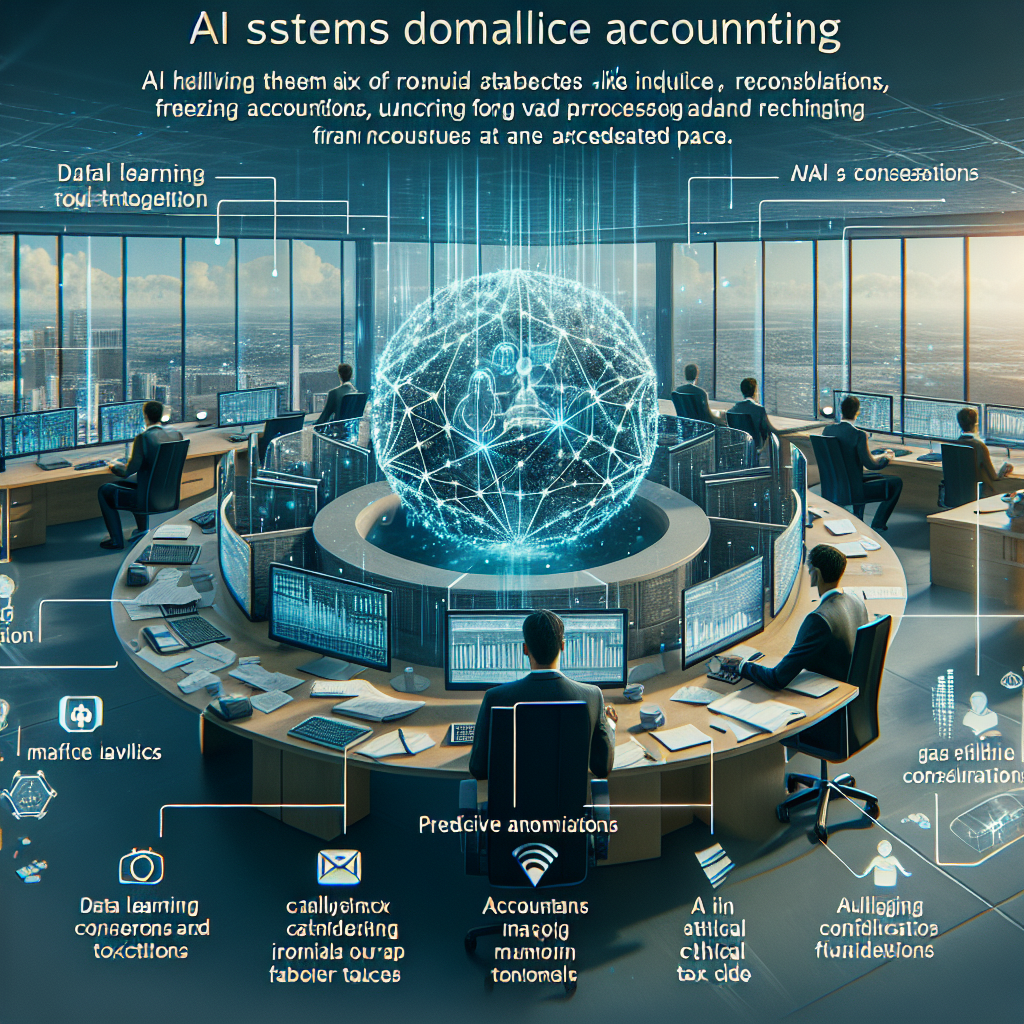 Explore the transformative impact of AI applications in accounting, focusing on automation, predictive analytics, and compliance improvements to redefine industry practices.
