

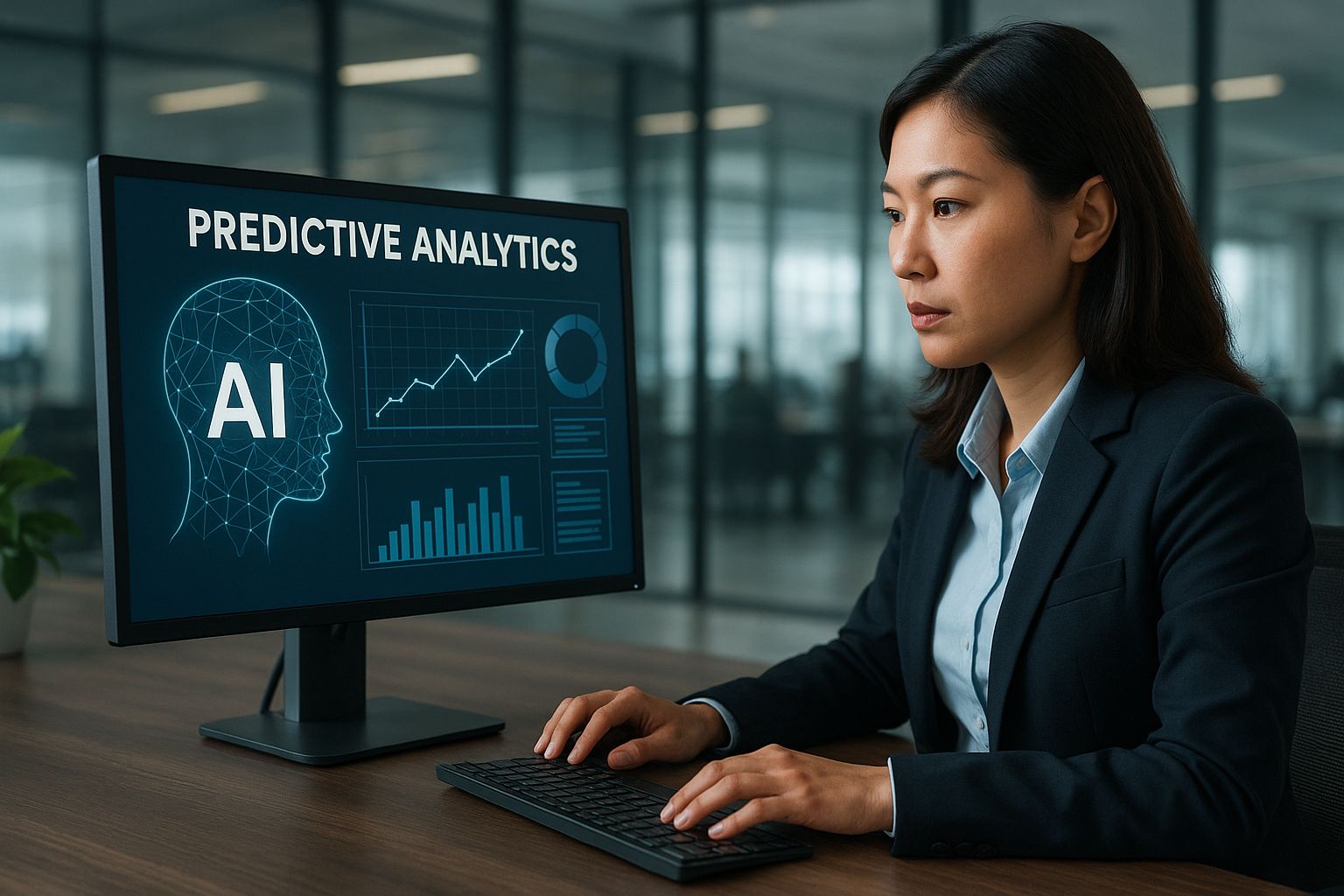
In the contemporary business landscape, artificial intelligence is diligently redefining operational standards. The latest trend gaining momentum is the integration of predictive analytics within AI frameworks to drive unprecedented efficiency across enterprises.
Predictive analytics, a derivative of AI, analyzes historical data to predict future outcomes. Companies leveraging this technology are experiencing substantial improvements in decision-making processes. It acts as a catalyst for proactive strategies, fostering a culture of foresight and innovation.
Major corporations like Amazon and Walmart have embraced predictive analytics, effectively revolutionizing their supply chain management. By analyzing purchasing patterns and inventory levels, these giants significantly reduce costs and enhance customer satisfaction. The results manifest as improved cash flows and sustained competitive advantage.
Another key benefit of predictive analytics within AI is its capacity for predictive maintenance, particularly in manufacturing. Boeing, for example, employs these capabilities to predict machinery failures, thus preventing downtime and maximizing productivity. This proactive approach not only increases operational reliability but also extends machinery lifespan, culminating in reduced capital expenditure.
Industries such as finance are also capitalizing on AI-driven predictive models to anticipate fluctuations in stock markets, enabling investors to make informed decisions. The use of AI in creating compelling and sophisticated trading strategies is indeed a testament to its growing importance in fintech circles.
However, the surge in AI-driven predictive analytics is not without challenges. Data privacy remains a critical concern. Organizations must navigate the complex landscape of compliance, balancing the potential of AI while adhering to stringent regulations like the GDPR.
Finally, the effectiveness of predictive analytics relies on the quality of data. Companies are encouraged to invest in robust data governance frameworks. By ensuring accuracy and integrity in their datasets, businesses can unlock the full potential of predictive analytics and enhance their AI initiatives.
As industries continue to embrace AI, the integration of predictive analytics signals a significant shift towards data-driven decision-making. By enhancing efficiency and fostering innovation, companies can secure a resilient position in the ever-evolving market.

