

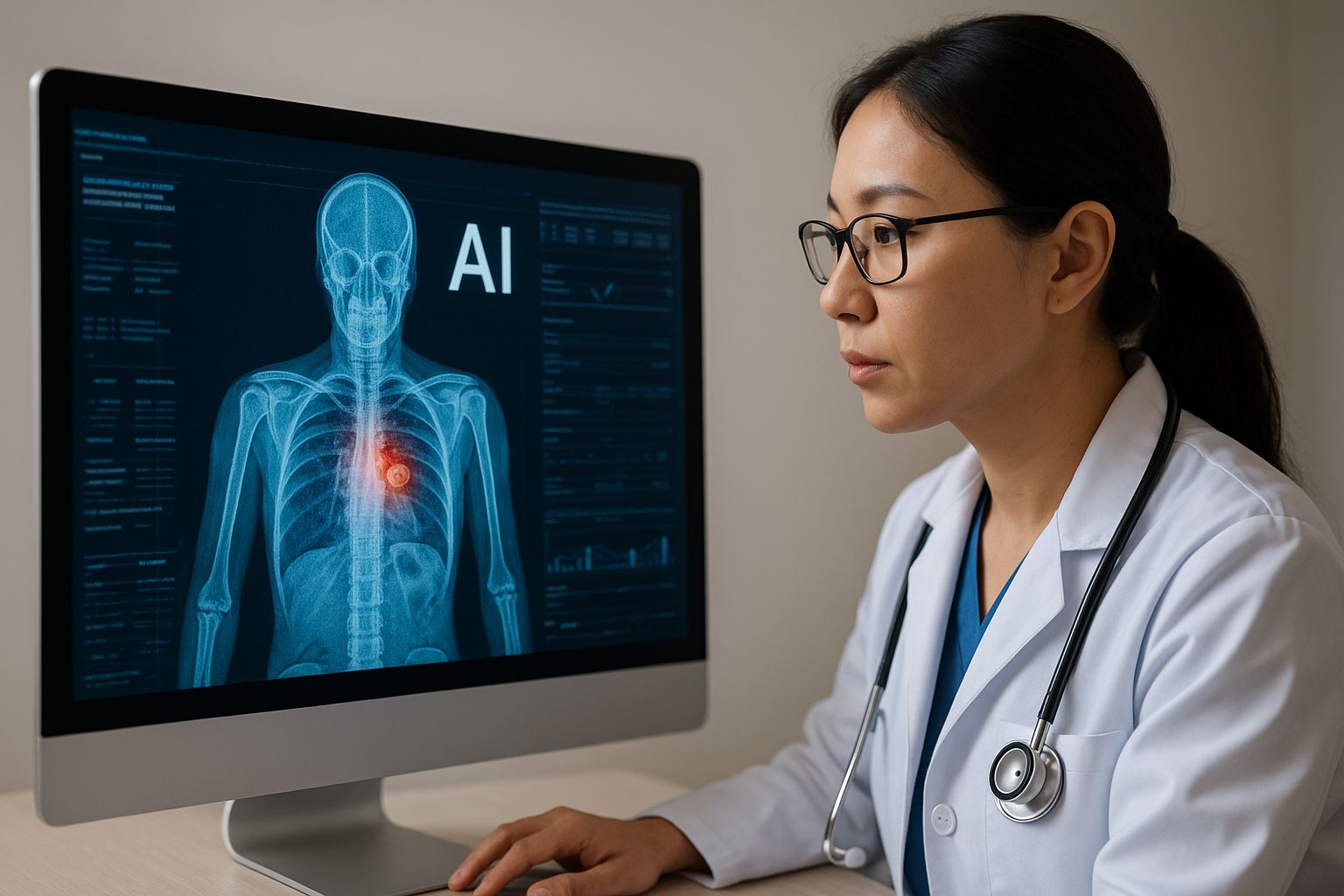
Artificial Intelligence (AI) has been making substantial inroads into healthcare, with significant advancements emerging in the realm of oncology. This past week, a collaboration between a leading AI firm and a top cancer research center unveiled a breakthrough AI algorithm designed to enhance early cancer detection and treatment outcomes, capturing the attention of the medical and technological communities alike.
AI’s potential in oncology is particularly promising, as it offers the ability to process vast amounts of data quickly and accurately. This capability is critical in cancer research, where early detection can significantly improve patient survival rates. The newly developed AI model employs deep learning techniques to analyze medical imaging data, identifying potential cancerous growths with a precision that surpasses existing human capabilities.
The healthcare industry has long faced challenges such as diagnostic inaccuracies and treatment delays. By integrating AI into the diagnostic process, medical practitioners can now have access to highly sophisticated tools that support accurate and timely decision-making. This recent development exemplifies how AI is revolutionizing the way healthcare professionals approach oncology.
A noteworthy aspect of this innovation is its potential scalability. AI models like these are designed not only to improve clinical practices in established hospitals but also to bridge gaps in lesser-developed regions where expert oncologists are often scarce. By positioning AI algorithms as supplementary tools, healthcare providers can extend critical oncology services to underserved populations, working towards reducing global health disparities.
The real-world cases where AI integration has already shown benefits underscore its transformative promise. For instance, a renowned hospital implemented AI-driven imaging analysis, which has resulted in a reported 20% increase in early cancer detection rates. Such advancements underscore the value of continued investment and research in AI developments tailored to healthcare needs.
While skepticism exists about reliance on AI in life-critical scenarios, strides in ensuring algorithmic transparency and ethical standards continue to improve trust in AI applications. As regulatory bodies become more familiar with AI’s potential, policies supporting its responsible implementation are expected to progress, further embedding AI into the healthcare framework.
The AI healthcare landscape is rapidly evolving, suggesting a future where AI not only complements human expertise but also enhances it. With continued collaboration between technology developers and medical professionals, AI-powered tools are set to become integral components of patient-centered care systems globally, transforming lives and reshaping the oncological field.

