







The integration of AI technology in the realm of accounting has significantly reshaped the landscape, offering numerous advanced applications that enhance efficiency and accuracy. In the past few days, one particular trend that has taken the spotlight is the influence of Generative Pre-trained Transformers (GPT) on accounting practices.
AI applications such as GPT, a state-of-the-art language processing AI model, have expanded beyond their initial roles and are now making significant strides in the field of accounting. The use of these models has been transformative, providing groundbreaking solutions across various accounting functions.
In auditing, for instance, AI applications have revolutionized how accountants handle vast volumes of financial data. GPT and similar models streamline data analysis, reducing time-intensive manual verification processes, and improving the detection of anomalies or fraudulent activities.
A real-life business case that showcases the efficacy of these AI applications involves a small accounting firm in New York City. The firm adopted an AI-driven audit tool powered by GPT, bypassing traditional methods that were both labor-intensive and prone to human error. This transition enabled the firm to audit large data sets efficiently, detecting discrepancies with high precision.
Moreover, in financial reporting, AI applications are used to automate routine tasks such as data entry and report generation. The implementation of GPT tools allows accountants to focus more on strategic decision-making and providing value-added services to their clients.
A notable company that has embraced this change is a leading consumer goods firm which utilizes AI for drafting financial statements. By incorporating GPT models, they ensure that the information disseminated is both accurate and timely, significantly reducing the financial reporting period.
The evolution of AI applications in accounting does not only benefit individual firms but has implications for the industry at large. As these technologies evolve, it is expected that many accounting firms will continue to adopt AI models to stay competitive and relevant.
It is clear that AI applications, epitomized by GPT, are bridging the gap between traditional accounting practices and advanced technology. As these tools continue to develop, they promise to further transform the industry, offering innovative solutions that redefine the roles of accountants today.
Estimated reading time: 1 minute, 52 seconds
Recent Advances in AI Applications: A Look at GPT's Influence on Accounting Featured
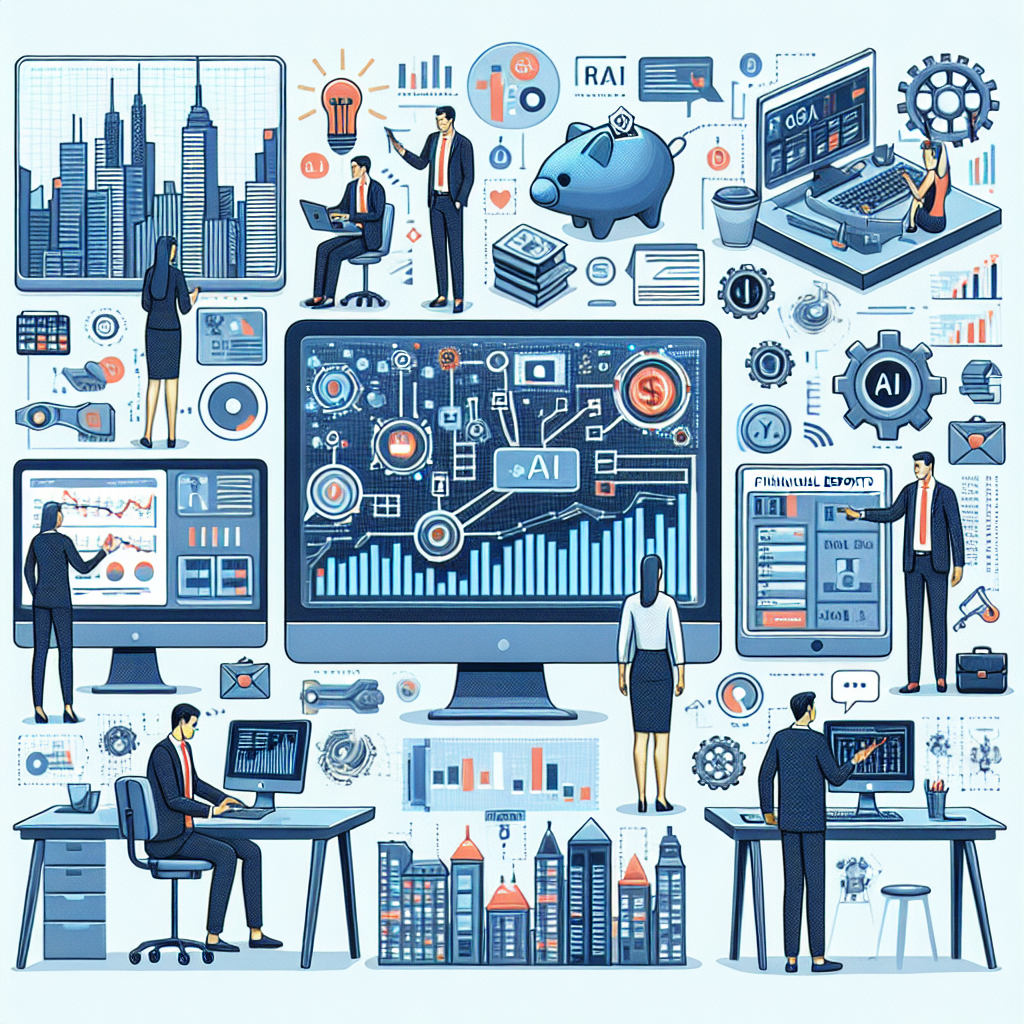 Explore how GPT and AI applications are transforming the landscape of accounting. Discover the latest industry trends and real-world business applications.
Latest from AIML Tech Brief
Most Read
-

-
Oct 30 2018
-
Written by Craig Gehrig
Many large companies have already adopted some form of automation…
-
-
-
Dec 16 2019
-
Written by News
Artificial intelligence will be used to complete an unfinished symphony,…
-
-
-
Mar 17 2020
-
Written by Deborah Huyett
“What do you think you’re doing, Dave?” This iconic line…
-
-
-
Jan 08 2019
-
Written by Robert Agar
Industrial robots are not a new phenomena. They have been…
-
