







Artificial Intelligence (AI) is playing a vital role in transforming various industries, with healthcare witnessing one of the most substantial impacts. Over recent years, AI applications in healthcare have risen sharply, with personalized healthcare taking the spotlight. This trend underscores the potential of AI to revolutionize patient care, diagnosis, and treatment outcomes.
AI-driven personalized healthcare primarily utilizes machine learning algorithms to assess vast datasets and generate insights that tailor medical treatments to individual needs. The integration of AI in healthcare is more profound as it encompasses patient history, genetic data, and lifestyle factors to ensure better-targeted therapies. For instance, IBM Watson’s use in oncology has provided oncologists with treatment suggestions based on data-driven evidence, showcasing AI's growing expertise in such fields.
Moreover, AI applications excel in predictive analytics, enabling healthcare providers to foresee potential complications and intercede preemptively. A Danish startup exemplifies this innovation, leveraging AI to predict chronic disease progression, thus aiding in timely interventions and drastically improving patient outcomes.
One of the significant AI use cases in personalized healthcare is the development of virtual health assistants. These advanced AI systems offer personalized advice, reminders, and health monitoring services to patients. Virtual health assistants are increasingly deployed in managing chronic diseases by promoting adherence to medication regimens and lifestyle modifications.
Despite these advancements, challenges related to data privacy and ethical concerns remain critical. Ensuring the protection of sensitive patient data while maintaining transparency in AI operations is paramount. The healthcare industry must collaborate with AI technology developers to create robust frameworks safeguarding data privacy and addressing ethical issues effectively.
The embrace of AI in personalized healthcare is not without its roadblocks; however, with continued technological evolution and robust regulatory frameworks, AI applications can become a cornerstone in delivering superior healthcare. The rapid adoption of AI reflects this transformation being witnessed today, which is set to redefine traditional approaches to healthcare and lead to more personalized, effective treatments on a global scale.
Estimated reading time: 1 minute, 44 seconds
The Surge of AI in Personalized Healthcare: A Game Changer Featured
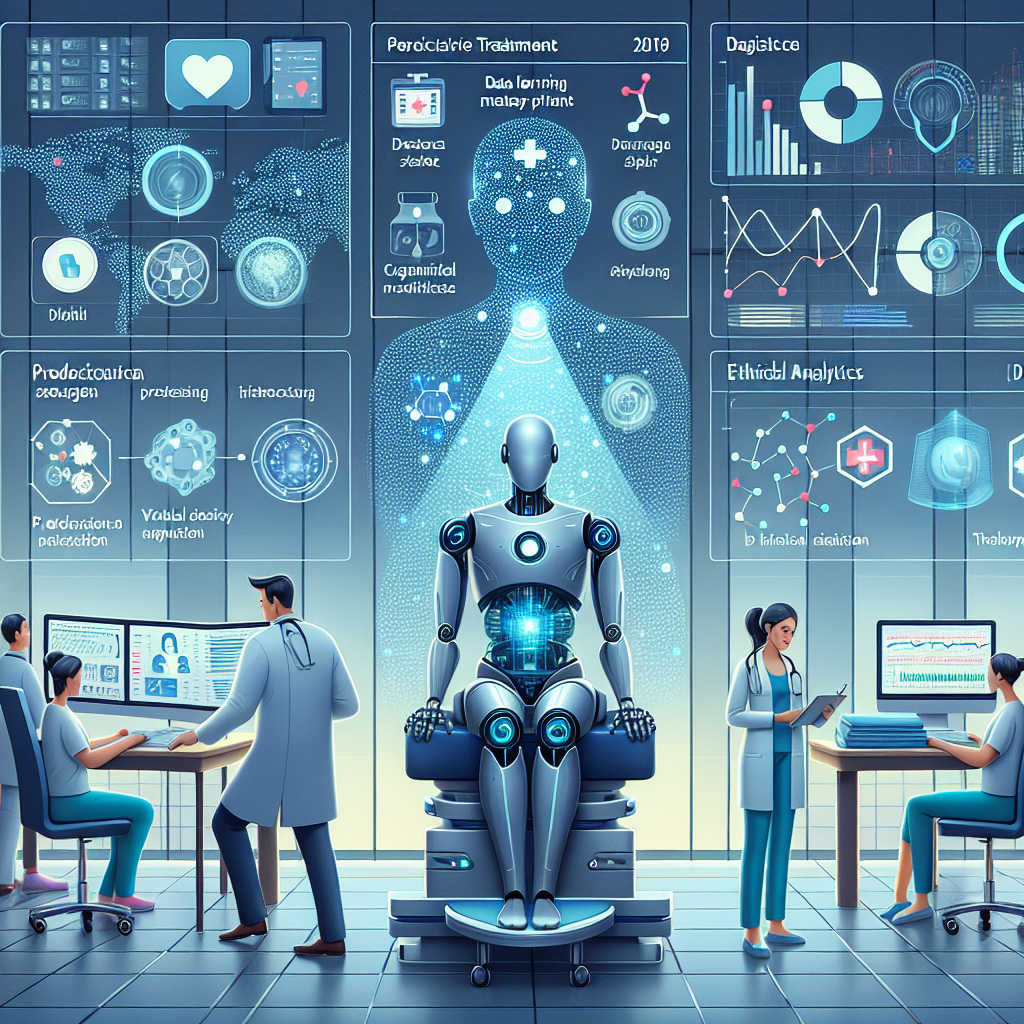 Explore the transformative impact of AI in personalized healthcare, how machine learning tailors treatments, and the ethical concerns that need addressing for improved patient outcomes.
Latest from AIML Tech Brief
- The Rise of Ethical Machine Learning in Today's Enterprises
- The Crucial Role of Machine Learning in Transforming Financial Compliance
- Machine Learning's Role in Revolutionizing Supply Chain Management
- The Rise of AI in Financial Services: Transforming Operations and Customer Experience
- Machine Learning Ushering In Data Analytics Revolution
Most Read
-

-
Oct 30 2018
-
Written by Craig Gehrig
Many large companies have already adopted some form of automation…
-
-
-
Dec 16 2019
-
Written by News
Artificial intelligence will be used to complete an unfinished symphony,…
-
-
-
Mar 17 2020
-
Written by Deborah Huyett
“What do you think you’re doing, Dave?” This iconic line…
-
-
-
Jan 08 2019
-
Written by Robert Agar
Industrial robots are not a new phenomena. They have been…
-
