



The integration of Machine Learning (ML) into supply chain management is paving new avenues for efficiency and accuracy.
Recent trends highlight how companies are leveraging ML to enhance forecasting, optimize inventory levels, and streamline logistics operations.
Machine learning, a subset of AI, is transforming traditional supply chain models by providing predictive analytics that offer better insights into demand forecasting.
Companies such as Amazon have set a benchmark by incorporating AI-driven predictive tools to ensure inventory is finely tuned to customer demand patterns.
Furthermore, ML algorithms can analyze vast datasets for anomalies, helping businesses mitigate risks and improve decision-making processes in real-time.
Predictive analysis is also crucial in route optimization, where delivery times can be significantly reduced by analyzing traffic patterns and other logistic variables.
A prominent example is how DHL utilizes ML technologies to align with their shipping schedules and prosecute efficient routes, ultimately reducing their carbon footprint.
The agility that ML introduces empowers supply chain managers to create resilient networks that can swiftly adapt to market changes, ensuring customer satisfaction and operational excellence.
As the global supply chain continues to face challenges, embracing machine learning is not just an advantage—it's imperative.
Estimated reading time: 1 minute, 3 seconds
Machine Learning's Role in Revolutionizing Supply Chain Management Featured
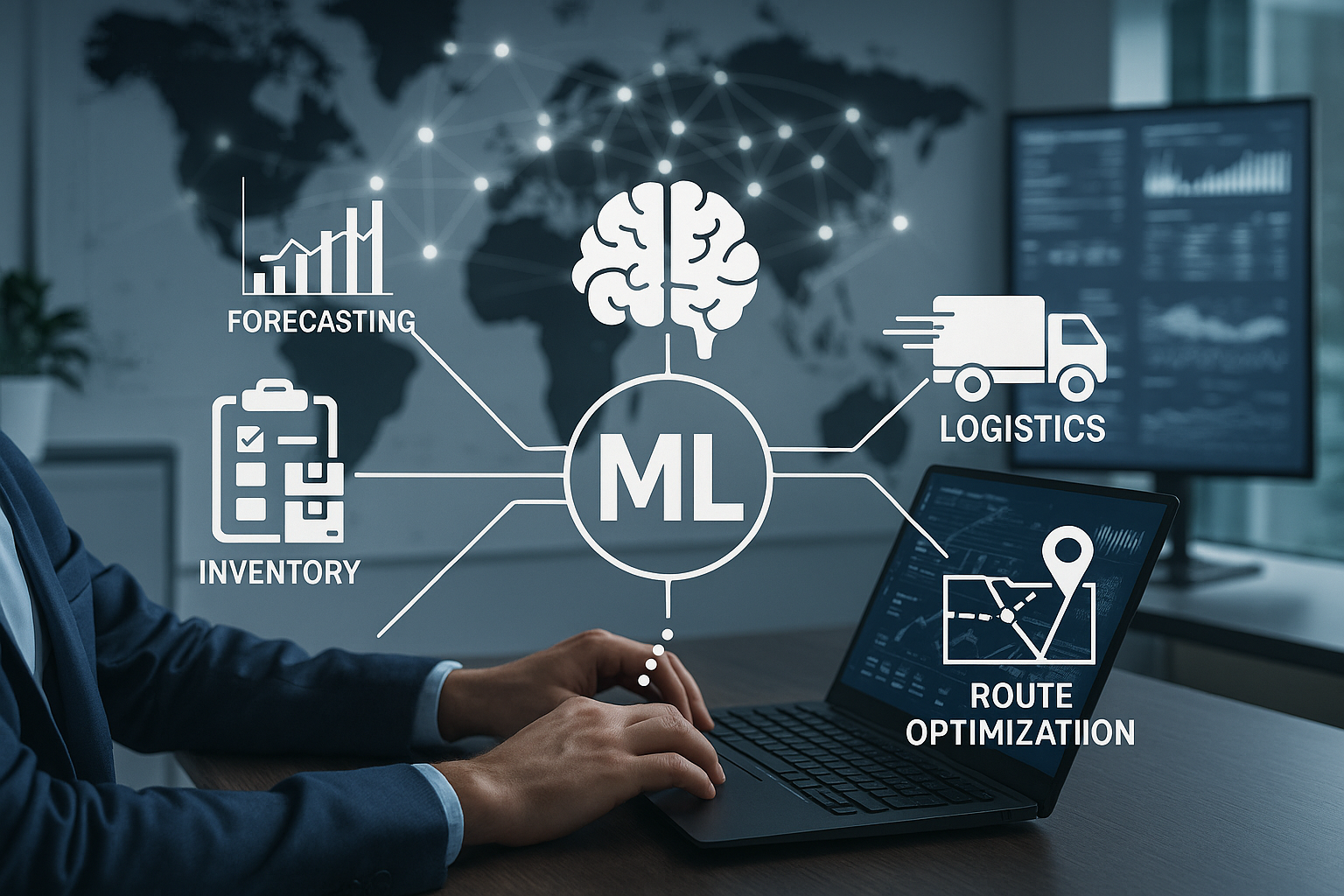 Explore how Machine Learning is revolutionizing supply chain management with its predictive analytics, optimizing inventory, and enhancing logistics.
Latest from AIML Tech Brief
- The Rise of Machine Learning in Financial Forecasting
- Innovative AI Applications Revolutionizing Healthcare Delivery
- Leveraging AI Tools in Accounting: A Game-Changer for Financial Firms
- Emerging Tools in AI: Transforming Industries into the Future
- The Latest AI Tools Revolutionizing Business Operations
Most Read
-

-
Oct 30 2018
-
Written by Craig Gehrig
 Many large companies have already adopted some form of automation…
-
-

-
Dec 16 2019
-
Written by News
Artificial intelligence will be used to complete an unfinished symphony,…
-
-

-
Mar 17 2020
-
Written by Deborah Huyett
“What do you think you’re doing, Dave?” This iconic line…
-
-

-
Jan 08 2019
-
Written by Robert Agar
Industrial robots are not a new phenomena. They have been…
-