

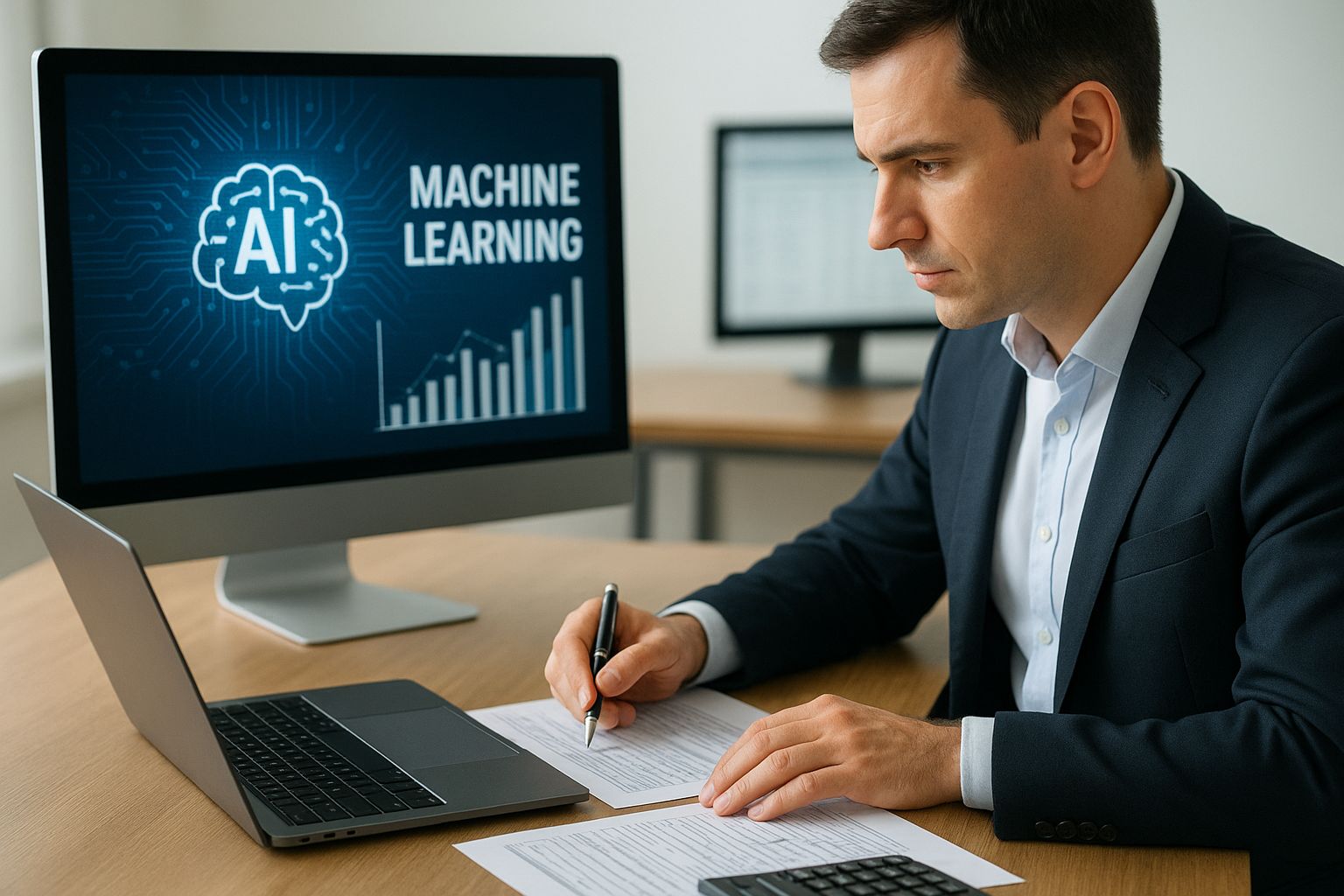
In the rapidly evolving landscape of accounting, machine learning is emerging as a transformative force. As financial professionals seek to streamline processes and enhance accuracy, AI-driven solutions are making significant inroads into accounting practices.
Machine learning is revolutionizing auditing. Traditional audits often rely on a sampling method where a subset of transactions is analyzed to infer the integrity of entire datasets. However, machine learning algorithms can scrutinize every transaction, identifying anomalies and patterns indicative of potential fraud or errors. This not only heightens accuracy but also reduces the scope of human oversight required.
Another critical application of AI in accounting is the automation of routine and repetitive tasks. Machine learning algorithms can automate tasks such as data entry, invoice processing, and reconciliation. This frees up valuable time for accountants to focus on more strategic activities such as financial analysis and decision support, improving overall organizational efficiency.
Real-world examples underscore the effectiveness of AI in accounting. Global auditing firms have already integrated machine learning technologies, enhancing their service delivery. For instance, EY’s proprietary AI tool, ‘Helix,’ enables the real-time analysis of large volumes of financial data, improving audit quality and reducing operational risks.
Despite its transformative potential, integrating AI into accounting comes with challenges. Essentially, the success of AI implementation is contingent upon data quality. Businesses must ensure robust data governance frameworks are in place to manage data quality, privacy, and security—a task often underestimated. Furthermore, there’s the human element to consider. As routine tasks are automated, the demand for technologically adept accountants who can work alongside AI systems is rising. Firms must prioritize upskilling their workforce to maximize AI’s benefits.
Looking ahead, the intersect of AI and accounting is poised for continued growth. The convergence promises not only to elevate accounting standards but also redefine financial advisory roles. Firms embracing machine learning technologies today are likely to set new benchmarks in accuracy, efficiency, and strategic insight.
In conclusion, as AI becomes synonymous with modern accounting practice, firms that champion digital transformations stand to gain a competitive edge in an increasingly complex financial environment.

